

What is Attack Surface Analysis?
Attack Surface Analysis (ASA) is a strategic approach to understanding all the potential points where your systems, applications, or infrastructure are exposed to cyber threats. For decision-makers, it serves as a vital component of modern risk management and proactive defense planning.


In today’s digital landscape, every connected asset—whether it’s a server, web application, endpoint, or API—can represent a potential entry point for attackers. As your organization scales, so does your attack surface, often in ways that are invisible until exploited.
Attack Surface Analysis enables you to:
- Gain visibility into all exposed digital assets—both known and unknown.
- Identify weak points across your infrastructure before adversaries do.
- Prioritize risks based on potential impact, exposure level, and business value.
Support compliance and regulatory requirements with better asset intelligence.
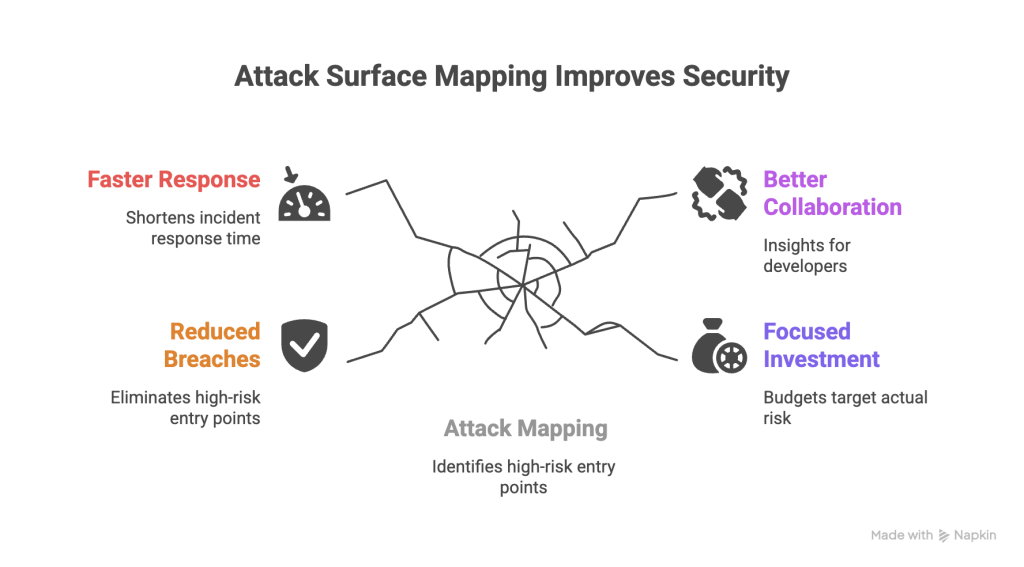
- Reduces Breach Probability: By eliminating or mitigating high-risk entry points.
- Improves Incident Response Readiness: A mapped attack surface shortens response time and clarifies root causes.
- Enhances DevSecOps Collaboration: Developers gain insights into what needs protection, reducing costly redesigns later.
- Supports Investment Decisions: Focus security budgets on where the actual risk resides, not just assumed risk.
While the technical implementation of ASA is handled by security teams and red team professionals, it requires executive sponsorship and cross-team alignment. Ideally, CISOs and CTOs should embed ASA into:
- Threat modeling,
- Vendor risk management,
- Cloud migration strategies,
- M&A security due diligence,
- and board-level cyber risk reporting.
In short:
Attack Surface Analysis isn’t just a technical process—it’s an essential layer of defense for informed decision-making, operational resilience, and long-term cyber risk reduction.